Sunday, 27 March 2016

Jim's column 26.3.2016

It is sad to report the death this week of former Coventry City left winger Jack Boxley at the age of 84. Jack made his name at Bristol City and was a member of their Third Division South championship side in 1954-55 before a move to Coventry in 1957 for whom he made 94 appearances scoring 18 goals.

Cradley-born Jack caught several league club's attention playing for Stourbridge in the Birmingham League as a 19-year old and Bristol City had to pay £2,000, a large fee for a non-league player, to aquire him in October 1950. Within a week Jack made his debut in a 2-1 home win over Newport County alongside former Coventry centre-forward George Lowrie. In 1951-52 he overcame a serious leg injury and between 1950 and 1956 made 200 starts for the Robins, netting 34 goals and was a major contributor to many of centre-forward John Atyeo's 100 plus goals. The 1954-55 championship side racked up 70 points (when there were two points for a win) and 101 league goals and Boxley rightly became a Legend in Bristol. Atyeo and Boxley were best friends and were best men at each other's wedding.
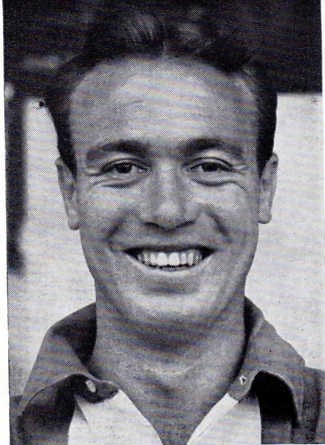
                                                             Jack Boxley

In 1956-57 Jack lost his first team place at Ashton Gate and in December 1956 City manager Harry Warren, using the money raised by the sale of Reg Matthews to Chelsea, signed Jack and his Bristol teammate Jimmy Rogers, a goalscoring inside-forward. In an inauspicious first game – against Crystal Palace at Highfield Road – the floodlights failed and the game was abandoned after 51 minutes at 0-0. Seven days later Boxley scored on his full debut as City won their first away game of the season 3-2 at Southend. But the club was in a mess with large debts, falling crowds and their lowest league position since the 1920s. Boxley started on the left-wing, and scored four goals in his first five games, but was soon switched inside to accommodate the young home-grown starlet Ray Sambrook.

In 1957-58 City's problems came to a head – manager Warren was sacked and Billy Frith returned as manager but was unable to stop the club finishing in the lower half of the division which meant they would be placed in the new Fourth Division. Jack played a small part in the 1958-59 promotion season, making 15 appearances and scoring one goal before losing his place to Alan 'Digger' Daley.

Back in Division Three City made a strong promotion challenge in 1959-60 and in late February laying third in the table, they faced second placed Bury at Highfield Road. It was a day for drama, with a big crowd (over 21,000) there to see it happen. In Bristol the drama was unfolding. Jack, who still lived and trained in Bristol, was travelling up to Coventry on the morning of the match when his car broke down. He never made the match and Coventry with no ready-made stand-in to take his place, had to pull young full-back Brian Shepherd from the 'A' team playing locally that morning. City played like a team with a vital part missing and lost 1-0 and it was the beginning of a slump that ended the team's promotion hopes. Jack only made two more appearances for City and re-joined his beloved Robins the following August.

His return to Ashton Gate was not a great success. He made only 13 appearances and although he failed to score a league goal he did manage Bristol's first-ever goal in the League Cup in a 1-1 draw with Aldershot. Released by the Robins the following summer, Jack played for Chippenham Town in the Western League before hanging up his boots. He married Patricia and brought up a family in Long Ashton and in 2014 was voted into the Bristol City Hall of Fame and was a regular at Ashton Gate for many years. This week his daughter Lisa Bardens told the Bristol City website that her father, like many former footballers, had been suffering from dementia.

Swindon Town came to Coventry last week and escaped with their impressive unbeaten league record against the Sky Blues intact. The clubs have met 11 times since City's last victory in the fixture – in October 1964. Swindon have won six and drawn five of those games since goals by Ernie Machin, George Hudson and Ken Hale earned Jimmy Hill's side a 3-2 home win in 1964.

Regular reader Keith Ballantyne asked what was the last competitive appearance in a City shirt by an outfield member of the 1987 F.A.Cup winning side ?

The answer is Lloyd McGrath who on 10th April 1994 came on as a substitute, coincidentally versus Tottenham at Highfield Road. City won 1-0 with a Peter Ndlovu penalty. Gary Mabbutt also played that day. Another hero of '87, Brian Borrows, who tragically missed out at Wembley through injury, played on for three more years making the last of his 488 appearances in a City shirt against Derby County on 3rd May 1997.


Sunday, 20 March 2016

Jim's Column 19.3.2016

Last week I wrote about Coventry City's poor form against Lancashire clubs and what happens - the Sky Blues end a 97-year hoodoo at Blackpool and record only their fifth win in the North West in 15 trips since they were relegated from the Championship in 2012. It may have been an ugly win over a poor side but that is just what is required to get the team into the play-offs.

City's record at Bloomfield Road has historically been atrocious with only one win and one draw in 13 visits in League & Cup games since they joined the league in 1919. The clubs didn't meet in league games between 1925 and 1970 and have only played them regularly since 2007. The solitary win came in March 1923, a month before the old Wembley stadium was opened. Jimmy Dougall netted the only goal in a dour game as City pulled off a shock result by beating the league leaders despite being in the relegation zone. Since then there have been some dreadful results including City's 1-0 loss at Bloomfield Road in 1970-71 when the Seasiders were rated as one of the worst sides to play in the top division since the war.

Talking of Blackpool, regular correspondent Keith Ballantyne reminded me of comments made by Ernie Hunt regarding the famous donkey-kick goal against Everton in 1970. Ernie has often mentioned that he and Willie Carr had tried the trick before in a game at Blackpool. Keith wondered if it was the league defeat there in December 1970 but in fact it was a pre-season friendly at Bloomfield Road in August 1970, two months before the famous goal against Everton. The free-kick, which Ernie has always said almost hit the clock, was so much a failure that the Coventry Telegraph's Derek Henderson didn't even mention it in his match report. I reminded Keith that Alan Green and Johnny Stevenson pulled off the donkey-kick trick in an FA Youth Cup tie against Shrewsbury soon after the Everton game. Henderson reported that this goal, the final one in a 6-0 home victory, was 'further out than Hunt's and left the Shrewsbury 'keeper helpless'.

A couple of weeks ago I wrote about famous City slumps, one of which turned out to have silver lining (1964) and one which ended in disaster (2002). Dave Long reminded me about a slump in form in 1973 after City went out of the FA Cup in the sixth round. With new signings Tommy Hutchison and Colin Stein dazzling and homegrown youngsters Willie Carr, Dennis Mortimer and Brian Alderson impressing, Joe Mercer and Gordon Milne's team had an impressive winter which took them to a comfortable mid-table place in Division One and an FA Cup run that had fans talking about a first ever trip to Wembley. However after their FA Cup defeat at Molineux the side lost form completely and lost nine of their final ten games, the only result being a 3-1 victory over Ipswich at Highfield Road. In the modern era that sort of run would probably result in a sacking as it did for Chris Coleman in 2010 when his Sky Blues team fell from eighth place to 19th in their final eleven games which failed to produce a win and gleaned only five points.

Susan Andrews from Hinckley was in touch recently regarding an old programme she wanted to donate to the club's archives. Sue and her friend Jean McCormick (who now lives in Canada) were both born in Coventry, and trained as Nursery Nurses. They both moved to the island of Bermuda and were working at a children's nursery in Paget in 1967 when they heard that the Sky Blues were visiting the island and planning a friendly game nearby.

Sue takes up the story:

'We made a banner out of babies muslin nappies (clean ones of course!!) and wrote upon it 'SKY BLUES' in the children's pale blue paint. I think that's what drew the players attention to us, as they were only known as Coventry City FC in the advertisement of the game there. Before the kick off several of the players came across for a chat and I recall that's when we were invited to the after game party !'

The Sky Blues were enjoying a promotion celebration holiday in the West Indies with a few friendly games thrown in and the game against a Police Recreation Select XI was the final game before they returned to the UK. City won the game, played at the Pembroke Hamilton Club Stadium, 8-0 with goals from Ronnie Rees (2), Brian Lewis (2), John Tudor, Ernie Machin, Dave Clements and Dietmar Bruck.

Sunday, 13 March 2016

Jim's column 12.3.2016


Two more defeats in the last seven days have made Coventry City's task of reaching the League One play-offs this season extremely difficult. After the Bury game last month City looked to be back on track following their January 'blip' with a play-off place definitely achievable. Since then four defeats in a row have punctured the dreams of City's fans who were hoping to see their team reach the play-offs for the first time in their history. The blip has now become a slump.

Over the past five seasons it has typically required 73 or 74 points to get into the League One play-offs, although last season Chesterfield finished sixth with 69 points. If we assume 73 points would be necessary for City to finish in the top six then a further 21 points is required, from the remaining 11 games (including today's game at Blackpool). That equates to seven victories or six victories and three draws. On current form that looks a tall order and only a swift return to the form of last autumn will suffice. In October and November City racked up 23 points from 11 games (six wins and five draws) with their dazzling football. That is the form that is now required.

The defeat at Shrewsbury made it four losses in a row and the team's worst run since the miserable days of 2012 just after they were relegated to League One. Following manager Andy Thorn's departure following a 2-2 home draw with Bury in August, Richard Shaw took over as caretaker manager, assisted by Lee Carsley. Shaw's team knocked Birmingham City in the League Cup but then lost four league games in a row:

Crewe (a) 0-1
Stevenage (h) 1-2
Tranmere (a) 0-2
Shrewsbury (a) 1-4

Mark Robins took over and lost his first game in charge (at the Emirates to Arsenal in the League Cup) and then lost his first league game (1-2 at home to Carlisle) to make it five consecutive league defeats.

Shrewsbury featured in that run as well as the current run and City have a woeful record in that town. In fifteen league visits the Sky Blues have won just once, at Easter 1958 when they turned around a 1-0 half-time deficit to win 3-1 with goals from Ray Straw (2) and Peter Hill.

Following last week's home defeat to Rochdale Keith Ballantyne wrote to me about City's record against Lancashire clubs in recent seasons. He wrote:

'the successive home defeats to Fleetwood and Rochdale (a 'City hoodoo' club in their own right if my memory serves me correctly?), plus Oldham's late equaliser at home last year and not to mention the legendary curse of Deepdale, the 6-0 thumping of Bury and the earlier wins against Wigan and Fleetwood aside, do you think there is any evidence to support a theory that City don't always do too well against sides from west of the Pennines ?


Keith is spot on about the Preston curse – City have never won at Deepdale in a league game. Rochdale too have become a 'hoodoo' club for the Sky Blues. For the second season running City have failed to beat a club who struggle to get 3,000 for home games and in 13 league and cup meetings with 'Dale' City have a solitary League Cup victory to their name. Oldham also have been a thorn in City's side over the last four seasons and City have managed to win only two of seven meetings.

I thought it worthwhile looking at the stats over the last four seasons (since we were relegated from the Championship). I have included teams from Greater Manchester (Wigan, Bury & Rochdale) and Merseyside (Tranmere) in my analysis and the results don't make pleasant reading.

At home the record against what Keith describes as 'Lancashire Laddies' is pretty poor with only four wins from 17 games, two of which were in 2012-13 and the other two this season (Bury 6-0 and Wigan 2-0), and nine draws. Away from home the Sky Blues have played 14 and won four, drawn four and lost six but apart from the two victories at Fleetwood have not won in eight trips north. The win ratio over Lancs' clubs over the period is only 25% compared to an overall win ratio of 36%. The statistics do seem to support Keith's theory about clubs from west of the Pennines. Let's hope City's form changes today at the Lancashire seaside at a ground no Coventry City side has won at since 1923.

Home
Away


Played
W
D
L
W
D
L
Pts
2012-13
8
2
2
0
2
1
1
15
2013-14
6
0
2
1
0
2
1
4
2014-15
8
0
3
1
1
0
3
6
2015-16
9
2
2
2
1
1
1
12
Totals
31
4
9
4
4
4
6
37

Coventry City's record against 'Lancashire' clubs in League One.

Sunday, 6 March 2016

Jim's column 5.3.2016

Coventry City's poor form continued at Barnsley on Tuesday night with a 2-0 defeat to the division's form team. This following hard on the heels of Saturday's home defeat to Fleetwood means City have won only one of the last eight games and three of the last fifteen (since that incredible performance against Gillingham. With only two home wins in eight, the team's form is of great concern and it is only the inconsistent form of the clubs around them that keeps them in the top six before today.

City fans have become accustomed to these slumps but they are not usually from such strong positions and I thought I would recall two such dips in form. In 2002, City's first year down from the Premier League, the Sky Blues, under Roland Nilsson had an impressive autumn run which enabled the fans to forget about the woeful start which cost Gordon Strachan his job as manager. At the end of October they briefly reached top spot but over the winter despite their form being inconsistent they kept in touch with the top six. In February six wins in eight games pushed them up to fourth and with seven games remaining a play-off place looked on the cards. Then disaster struck and the side recorded just a solitary point from 21 and finished tenth. In the final reckoning if City had got nine points from those seven games they would have clinched a play-off place. The slump cost Nilsson, somewhat unfairly, his position and since then the club have never been near the play-offs.

In 1963-64, when there were two points for a win) Jimmy Hill's team were nine points clear at the top of Division Three on 3rd January after a stunning first half of the season. 68 goals in 27 games and 18 wins out of 27 had in most people's eyes clinched promotion to Division Two. Then the wheels fell off and the team went until the last Saturday in March (11 games) before recording their next win. The results were as follows:-

January 11 (a) Reading drew 2-2
January 18 (h) Luton drew 3-3
January 22 (a) Oldham lost 0-2
February 1 (h) Hull City drew 2-2
February 8 (a) Mansfield lost 2-3
February 15 (h) Brentford drew 2-2
February 22 (a) Wrexham drew 1-1
February 29 (h) Bournemouth drew 2-2
March 7 (a) Watford drew 1-1
March 13 (h) Southend lost 2-5
March 21 (a) Bournemouth lost 1-2

By the end of February the Sky Blues' lead had been cut to one point with Crystal Palace on their shoulders and Watford a further point back. On 14th March Palace, with their tenth win out of 12, sailed past the Sky Blues and City fans, unable to see another victory were giving up on promotion (there were no play-offs in those days and only two were promoted). A week later Palace extended the lead to four points and Watford drew level with City, and with a game in hand, with several other clubs on their heels. Finally on 28th March City recorded a win, beating Oldham 4-1 at Highfield Road thanks to new signing George Kirby's hat-trick.

Two draws and two more wins put City back on tracks and on top with three games remaining but a draw at Millwall and defeat at Peterborough meant they went into their final game at home to Colchester two points behind Palace and level with Watford but with a superior goal average. Older fans will know the story had a happy ending – Palace and Watford both lost what looked easy games on paper, City scraped a 1-0 over Colchester and finished top. Interestingly Palace failed to win any of their last seven games.

This week, as in March 1964, some City fans are writing off the prospects of finishing in the play-off places. Some are saying that with our form our chances have gone. I believe form is a small part of the equation over the coming weeks. City's form in 1964 indicated that promotion was out of the question but that massive win over Oldham turned the tide for Jimmy Hill's side and although they had to rely on other team's mishaps, they regained their composure and achieved their goal. 1964 was a leap year, let's hope that is an omen for Tony Mowbray's team.

Hats off to former City boss Steven Pressley last week. He set up his Fleetwood side to frustrate the Sky Blues and took three points away to help their fight against relegation, before following up with a victory over Gillingham on Tuesday evening. He was the first former City boss to return and win a league game in Coventry since Harry Storer in 1947. Since then numerous managers have returned but failed including Jack Fairbrother (with Peterborough), Gordon Milne (Leicester), Bobby Gould (Wimbledon), Iain Dowie (QPR), Micky Adams (Sheffield United) and Mark Robins (Scunthorpe). Gould did manage a Full Members Cup victory at Highfield Road in 1989.
                                                                    Harry Storer

Storer, for many as important to the club's history as Jimmy Hill, left City to join Birmingham City in 1945, after revolutionising the club in the eight seasons leading up to World War Two. He brought the Blues to Highfield Road for a Second Division game in October 1946 and got a 0-0 draw but in August 1947 the Blues won 1-0 on their way to promotion to Division One. Walter Aveyard scoring the goal in front of 30,558. Just over a year later Storer amazingly resigned from his job at St Andrews to return to the Highfield Road hot-seat and steered the club away from the relegation zone.

Sunday, 28 February 2016

Jim's Column 27.2.2016

I recently had a very nice letter from Margaret Raven, daughter of the late Les Raven. Les was an avid reader of this column and used to write to me regularly with questions. Les passed away in October and amongst his effects Margaret came across a lovely postcard of a team picture of Coventry City and wondered if I had seen it. 

The picture was taken in 1929 and shows the team with a large trophy. I believe the trophy is the Lord Mayor of Coventry's Charity trophy which back in those days was played for in a friendly game between City and another Midland club at Highfield Road and raised money for the Coventry and North Warwickshire Hospital. The games were usually played towards the end of the season and opponents included Wolves, West Brom and Birmingham. The 1929 game took place on 29 April and 3,187 supporters watched City draw 4-4 with Blues with City's goals coming from Jimmy Loughlin (2), Billy Pick and John Starsmore. I can only assume that the trophy was retained by Coventry for six months and then passed to Birmingham for the next six months. If any readers can add anything else please let me know.

My comments in last week's column about the fastest goal by a City substitute has been questioned by Craig Richards. He believes Kevin Drinkell scored a goal against Aston Villa in 1990, ten seconds after coming on at Highfield Road. Fellow historian Dean Nelson supplied a video clip of the said game, a 2-0 victory, and I timed his goal as 55 seconds from when he entered the pitch. However for over 30 seconds after coming on 'Drinks' is kicking his heels as Villa's Kevin Mountfield receives treatment from the trainer but once the ball is in play he nets around ten seconds later from a corner.

The whole question revolves around how one defines 'fastest goal'. If one defines it by the time after entering the pitch then Andrews clearly has the fastest goal. The Drinkell situation however introduces the concept of playing time. The game was delayed for around 45 seconds whilst Mountfield was treated. This was not playing time, it was time that the referee would have added on at the end of the game because of an injury.

Therefore if one defines the fastest goal in terms of the playing time elapsed after coming on then Drinkell's goal is faster. One could make a case for either definition being valid. A very inconclusive situation! For the moment I will stick with my assertion that Wayne Andrews holds the record for scoring 23 seconds after entering the pitch but watch this space.

I investigated the fastest ever debut goal in league football and the record is held by a former City player. In 2004 Freddy Eastwood made his Southend debut v Swansea and netted after 7.7 seconds. He went on to score a hat-trick against a Swansea side that included a young Sam Ricketts.

Keith Ballantyne picked up on my comment that Andrews never started a first team game for the club and wondered if his ten appearances as sub without a start is a club record. The answer is yes it is a record, but last season Shaun Miller also came off the bench in ten league games without a start but did start a League Cup game. Other players to make a number of sub appearances without a start are Mathieu Manset (2013-14) with nine, Dylan McGeouch (2013-14) with eight, and Zavon Hines and Shaun Jeffers each with seven. Gary McSheffrey holds the record of the most sub appearances before making a start (11) with Gary Madine (9) and Callum Wilson (8) not far behind.

I can always rely on fellow historian and friend Geoff Moore to come up with interesting stats. He tells me that when Leon Clarke appeared at the Ricoh for Bury two weeks ago he became the first player to appear at the ground with six different clubs. The six are Wolves, Sheffield Wednesday, QPR, Scunthorpe, City and Bury. In five games in opposition colours he has managed just two goals (both for Scunthorpe in a 2-2 draw in 2012). Danny Pugh, another ex-City man now at Bury has appeared at the stadium for five different clubs.

Geoff also pointed out that we have had a 4-0 half-time lead in three games this season – Gillingham (h), Crewe (a) and Bury (h). He couldn't remember this happening in his 50 plus years watching the Sky Blues. Before this season, the last occasion was the final game at Highfield Road in 2005 when they led Derby 4-0 at the break (and went on to win 6-2). A year earlier, during the brief but exciting Eric Black era, City took a 4-0 half-time lead over Preston (winning 4-1). There were two League Cup games where a 4-0 half-time lead was taken, in 2002 v Rushden & Diamonds (final score 8-0) and in 1964 v Sunderland (final score 4-2). The previous occasion to 2004 in a league game was back in April 1963 when City beat Halifax 5-4 and George Hudson netted a first half hat-trick on his debut with Dietmar Bruck making 4-0 at the break. So in three months this season the Sky Blues have equalled their record for the last 53 years.

Sunday, 21 February 2016

Jim's column 20.2.2016

I'm still on a high from last weekend, one that will remembered for a long time in the city and by the supporters of Coventry City. The service at the cathedral for Jimmy Hill was an emotional affair with some great speakers, beautiful video clips and uplifting music witnessed by over 2000 supporters, dignitaries and a host well-known people from football and the media, including many past and present City players, managers, directors and staff. The event put the city of Coventry and the football club back into the national limelight and was a great credit to all parties. I was certainly proud to be involved in it and so much credit goes to Joe Elliott and Dave Long for their determination in making it happen.

The following day a JH-themed Legends Day was also a great success – probably the most successful in the nine years since CCFPA was formed. 40 former players including special guest Brian Kilcline enjoyed a memorable day with a record number enjoying great hospitality in the Eon lounge. The large numbers ensured a lot of money was raised for JH's favourite charities, Alzheimer's Research and Sparks, as well as CCFPA. A big thank you to those who donated raffle and auction prizes as well as the people who bought tickets and bid in the auctions. To top it all the team on the pitch came good after their rocky patch and notched the biggest home league win since Jimmy Hill was manager.

One has to go back to October 1963 and a midweek game against Shrewsbury Town to discover the last time the team won by a six-goal margin. That night Shrewsbury, with an 18-year old debutant goalkeeper, were thrashed 8-1 with goals from Ronnie Rees (3), George Hudson (2), Hugh Barr (2) and an own goal. Since then City have had big wins in Cup games v Macclesfield (7-0 in 1999) and Rushden & Diamonds (8-0 in 2002), and a 7-2 League Cup victory over Chester in 1985, but big league wins have been rare. Since 1963 there had been only three occasions that the team have scored more than five at home in the league:

1981-82 6-1 v Sunderland (Division 1)
2004-05 6-2 v Derby (Championship)
2005-06 6-1 v Derby (Championship)

You have to go back to March 1958 to find the last instance of a 6-0 home win (over Aldershot). On Saturday poor old Bury didn't know what to do to stem the tide and at one stage it looked as though City might threaten the all-time biggest win - 9-0 v Bristol City in 1934.

Adam Armstrong was on target twice in the second half to take his tally to 19 goals for the season and he has now scored two or more goals on seven occasions. This takes him past one of George Hudson's scoring records from1963-64 – George managed two or more on six occasions as he netted 24 league goals. Adam is the first City player to score seven braces (or more) since Ray Straw scored seven on his way to 27 league goals in 1958-59. In 1931-32 Clarrie Bourton managed it 13 times as he netted an all-time club record 49 goals in Division Three South.

Armstrong is closing in on Callum Wilson's 2013-14 total of 21 league goals and only Callum, Ian Wallace and Bobby Gould have scored more league goals in a season in the last 50 years. Since World War Two only twelve City players have scored more in a season than the young Geordie:

27 – Ray Straw (1958-59)
26 – George Lowrie (1946-47)
25 – Terry Bly (1962-63)
24 – Ken Chisholm (1951-52)
24 – George Hudson (1963-64)
24 – Bobby Gould (1966-67)
21 – Ian Wallace (1977-78)
21 – Callum Wilson (2013-14)
21 – Ken McPherson (1956-57)
20 – Ted Roberts (1948-49)
20 – Eddie Brown (1953-54)
20 – Ray Straw (1959-60)
                                                            Ray Straw

It's frightening to think that Armstrong has potentially another 15 games to overhaul some or all of these goalscoring legends and a post-war club scoring record could be on the cards. Only one man, the legendary Clarrie Bourton, has scored more than 30 league goals in a season – he did it in 1931-32 (49 goals) and 1932-33 (41 goals).

Several people asked me on Saturday when we had last had five different scorers in a game. It's actually quite rare and last happened in December 1995 in a 5-0 thrashing of champions Blackburn Rovers. On a icy pitch with Peter Ndlovu at the top of his game the scorers were: Dave Busst, David Rennie, Dion Dublin, Ndlovu and John Salako. This was also the last time that City won 5-0 at home. The club record for number of different scorers is six, achieved twice in the mid-war years. In 1927 City won 7-0 at Aberdare Athletic (the club's record away win) with six players netting the goals, then in 1930 City beat London side Thames FC 7-0, again with six different scorers.


Sunday, 14 February 2016

Jim's column 13.2.2016

As I write this the finishing touches are being made to the Jimmy Hill celebration that took place at the Cathedral last night. I hope it was a successful event – the hard work from all the parties involved deserved to be rewarded – and today our attention turns to Legends Day.

It is the ninth Legends Day since the Former Players Association was formed in 2007 and as usual there will be a host of stars at today's game. Legends Day has caught the attention of City supporters with over 500 people will be enjoying hospitality today. Amongst the guests will be a good contingent of the Hill family, including at least three of his children.

Hopefully 1987 FA Cup final skipper Brian Kilcline has arrived safely from Portugal and Bill Glazier is jetting in from Spain. There are lots more of City's former stars attending including Ian Wallace, Bobby Gould, Garry Thompson and Greg Downs. It promises to be another memorable day and I would encourage fans to be at their seats for the half-time parade of the stars and give them a fantastic reception.

I mentioned last week that a 'new' member, 93-year old Ray Paul, was attending and he is very excited about what will be his first visit to the Ricoh. A centre forward, Ray, who was the son of a trainer of near neighbours Nuneaton Borough, joined his dad and became a striking sensation with the ‘Borough’ scoring 42 goals in the 1941-42 season. Ray turned out for Coventry City as a guest player in the wartime Football League North and scored 8 goals in his ten appearances. He made his debut in a 4-1 defeat for the City in September 1944 at the Hawthorns v West Brom. Two weeks later he scored a hat-trick on his home debut in a 4-3 victory over Port Vale and went on to score eight goals in ten starts for the Bantams. In the same Coventry side at the time were City stalwarts George Mason, Walter Metcalf and Billy Frith. Ray also played as guest in six games for Nottingham Forest up to 1945-46. I'm looking forward to finding out what became of Ray after the war but I believe he played for Atherstone Town and ran a wallpaper shop in that town.
                                                                Ray Paul

Ray is definitely the earliest surviving player to become a member of CCFPA but Colin Collindridge at 96 is our oldest surviving former player but wasn’t signed for the City until 1954. Another member Jack Lovering who is also 93 was a WW2 junior for CCFC but didn’t make his first team debut for the Bantams until 1946.

Before last week's game at Vale Park Mike Prince asked me if City had played a friendly there in the late 1970s. He remembers going as a boy with his dad. The only friendly in that era was on 10 August 1976 when Gordon Milne took his team to the Potteries for a pre-season game. City won 3-0 with goals from David Cross (2) and Alan Green. The team was: Blyth: Coop, Holmes, Craven, Lloyd (Brogan), Dugdale, Beck (Cartwright), Green, Cross, Murphy (Ferguson), Powell.

Keith Ballantyne emailed me recently. He had been watching a video of City's final game at Highfield Road in 2005 which resulted in a 6-2 victory for the Sky Blues. He commented that Andrew Whing scored very quickly after coming on as a substitute and wondered if it was the quickest goal ever by a City sub. I watched the video myself and timed Whing's goal at 55 seconds after coming off the bench. There are several contenders for the title of fastest goal by a sub. In addition to Whing there are three other City subs who scored, according to match reports, 'within a minute' of coming on: John Beck at West Brom in a 3-3 draw in 1978, Noel Whelan v Burnley in the FA Cup in 2000 and Laurent Delorge at Sheffield United in 2001 (his first touch in league football). Unless anyone has evidence to the contrary I believe the fastest was recorded by Wayne Andrews at Barnsley in 2006. Wayne's goal (on his debut) came 23 seconds after he came off the bench for Leon McKenzie. Andrews' career at Coventry was severely hampered by injuries and in his two years at the club he never started a game but made 10 substitute appearances but never scored another goal.